
Introduction to the RX2000 Fiber Optic Digital Manager
The Optical Fiber Digital Manager is a fiber optic communication device designed and developed by our company, featuring fiber line management, real-time monitoring of communication status, and real-time alarm functions. It can be applied to any fiber link connection node, can be used independently, and can also replace traditional Optical Distribution Frames (ODF). It is compatible with both single-mode and multi-mode transmission modes, and we have developed products with SC and LC interface types.

The product has been in technical verification since the end of 2017, and it has now been over four years. After a series of research and development, production refinement, and stability testing, it has now matured into a series of products that are available on the market.
- Industry and Market Description
Fiber optic communication has greatly driven the globalization of information technology. Currently, the domestic fiber optic market has reached a scale of hundreds of billions, yet fiber optics remain in a state that is invisible, unmanageable, and uncontrollable. The emergence of the Fiber Digital Management System perfectly addresses this historical issue of fiber optics, marking a first in the industry and being the only product of its kind globally. This product can be widely applied in the fiber optic systems of operators such as Unicom, Telecom, and Mobile; various IDC data centers; and national defense fiber optic systems, facilitating the connection, management, and real-time monitoring of the communication health status of fiber optics, along with real-time problem alerts. It holds significant application value, especially for dedicated networks that require high communication quality.
- Technology and Hardware
The optical fiber digital manager integrates photoelectric sensors on each optical fiber coupler, capturing the infrared light signals emitted between patch cord connection points. The photoelectric sensor's photovoltaic effect converts the infrared light into a constant voltage/current signal that can be recognized by a computer, enabling real-time monitoring of the optical fiber status, digital management, and the definition of IoT attributes.
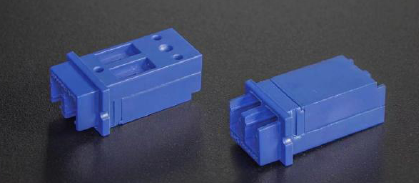
Dedicated Fiber Coupler
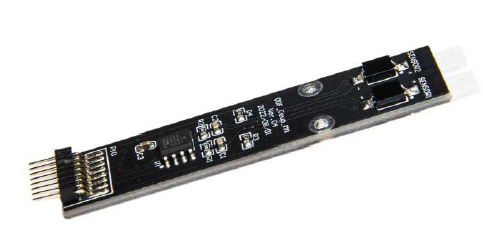 Data acquisition board integrated with photoelectric sensors (the black square represents the photoelectric sensor)
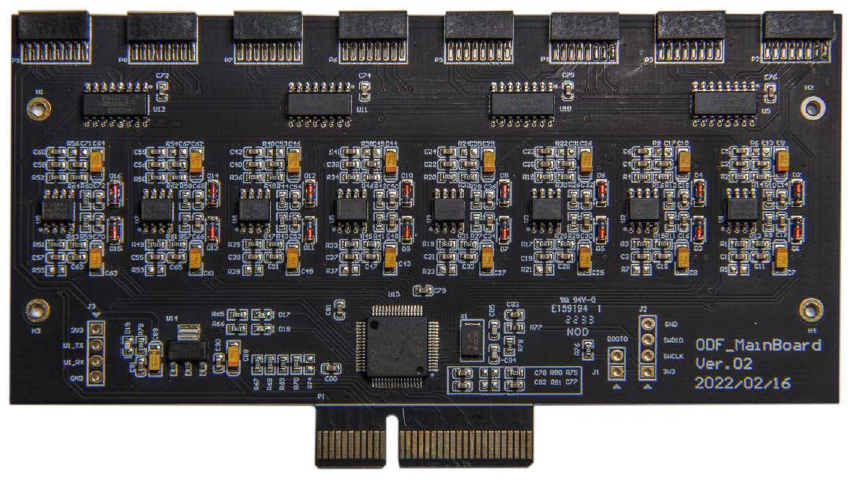
Data Processing Master
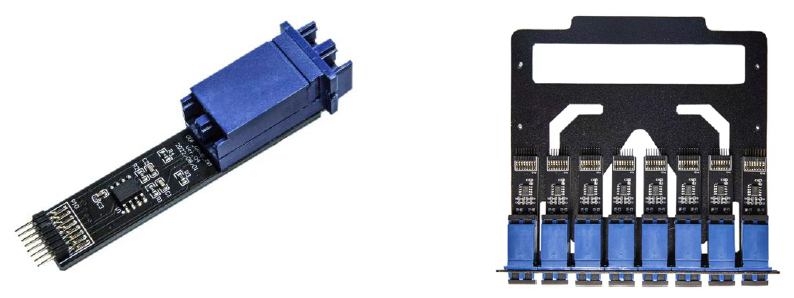
Couplers, Data Acquisition Boards, Master Connection Diagram
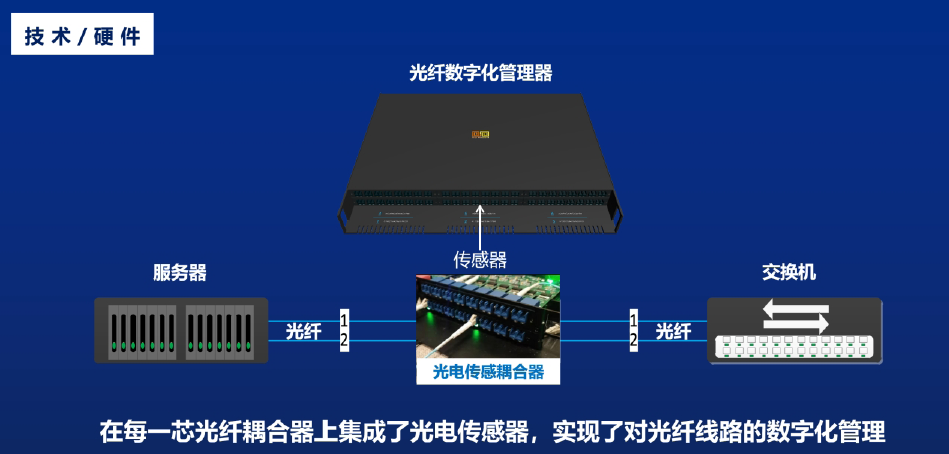
As shown in the figure above, when the server is connected to the switch via the fiber optic digital manager, the indicator light is green when there is infrared light in the fiber. The indicator light goes out when the fiber is disconnected or when the front and back-end devices are powered off and there is no infrared light. The fiber optic digital manager synchronously monitors the real-time status of the servers and switches at both ends (A and B). This is the basic hardware logic of the device.
- Software and Cloud Platform
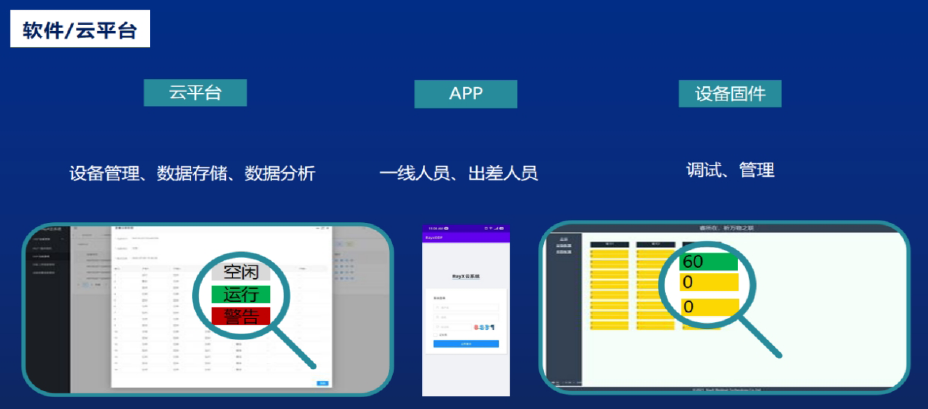
The fiber optic digital solution consists of hardware and software. The hardware is the fiber optic digital manager, while the software includes the cloud platform, APP, and device firmware.
The cloud platform is a comprehensive platform for managing devices, storage, and data analysis. The platform determines the status of the fiber based on the interface data uploaded by the fiber optic digital manager and classifies the fiber into three states: idle, operational, and warning.
The fiber optic digitalization is primarily reflected in the full-link quantification of the real-time status of the fiber.
1. No infrared light signal detected (idle state);
2. Infrared light signal detected within normal range (operational state);
3. Interface jumper not properly connected (warning);
4. When there are significant differences in optical fiber at different time points (optical loss)
5. Any optical signal loss in the transmission and reception channels (server or switch failure)
The APP is a mobile application designed for frontline engineers working remotely and for personnel on business trips, ensuring timely work while also providing biometric verification for security. The core function of the device firmware program is to present the basic data of fiber optic monitoring, while also incorporating debugging and management capabilities.
- Product Features
1. Compatibility: Compatible with both single-mode and multi-mode transmission modes;
2. Versatility: The 1U96 core, with a high-density design featuring 6 detachable service boards, is compatible with all cabinets and supports both SC and LC interface standards;
3. Safety: Low voltage signals will not interfere with optical signals;
4. Stability: The circuit is separated from the communication, so even if a circuit failure occurs, it will not affect the optical communication in any way.