
The application of broadcast-quality video in the public safety sector is becoming increasingly widespread alongside the growing demand for effective situational awareness and command control communication solutions. In this blog, we will explore five major application cases with our public sector experts.
1. Real-time HD Video for Situational Awareness—One Size Does Not Fit All!
Currently, the field of mobile and remote situational awareness employs a range of technologies, including sensors, artificial intelligence (AI), object recognition, and various types of software. However, the direct material required for these technologies still comes from video, which captures the actions and operations of individuals. There is a growing demand for broadcast-quality video in the public sector and public safety. UAS (Unmanned Aerial Systems) video is commonly used by SWAT teams, firefighters, search and rescue, and other emergency responders. Simply put, a drone is "a camera with wings," and LiveU technology can reliably transmit the footage captured by the camera in real-time to command centers and ground personnel. Helicopters are also used for aerial firefighting, as seen with Pegasus Aviación in Spain and Chile, which has improved visibility by integrating LiveU.
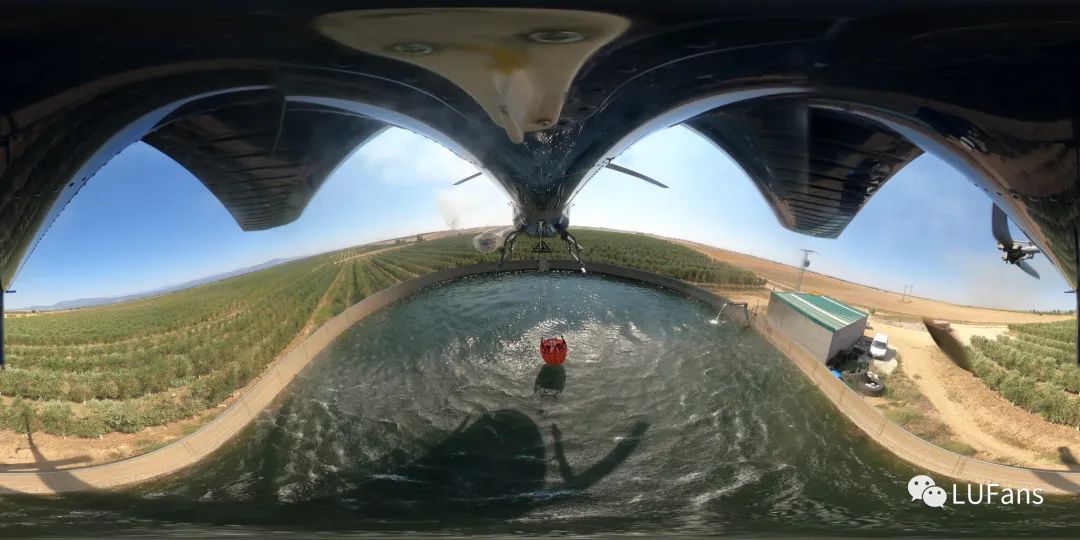
In urban and rural firefighting, live video technology can be combined with thermal mapping systems to help keep crowds away from danger. This application uses real-time video imagery combined with LiDAR (Light Detection and Ranging) cameras, which can measure temperatures from several miles away from the main fire area. The same integrated solution can also be used for structural analysis by deploying robots to enter and measure buildings, ensuring they are constructed according to safety regulations.
2. Reliable On-Site Real-Time Video and Intelligence Gathering
In SWAT scenarios, every second counts. The reliability, low latency, and uninterrupted nature of video are crucial for operational awareness. Aerial video signals play a vital role, with the increased use of cost-effective tactical drones that are often more suitable for such tasks than helicopters. This UAS technology can provide 360-degree situational awareness, relayed back to the command center for senior commanders to view. These videos can then be instantly transmitted in real-time to ground personnel, allowing them to watch on mobile phones or other small devices.
As seen in the case of the Derbyshire Constabulary in the UK, police departments and forces around the world widely utilize real-time video capture for evidence collection and remote monitoring at control centers.
In aviation, maritime, and border management, relevant departments often use helicopters equipped with specialized cameras. A significant portion of these events is closely related to SAR (Search and Rescue) situations. The Coast Guard can view broadcast-quality video signals transmitted from helicopters and send radio instructions to the helicopter and other crew members on board to assist in locating missing persons at sea.
3. Urban Fixed Surveillance—Crowd Monitoring, Evidence Collection, and Case Management
For example, customized trailers equipped with advanced video technology are increasingly used for monitoring large events and managing crowds during protests. LiveU's LU800 can transmit up to four video signals simultaneously, providing a more efficient way to manage footage compared to traditional "tape" and routing methods. Cellular bonding can also be used in conjunction with services like Starlink (Starlink, a satellite internet bandwidth service provided by SpaceX).
In these scenarios, usability and ease of operation are crucial. Most teams using these tools are non-professional technicians, and these situations often arise unexpectedly. Traditional solutions for radio and microwave antennas can take days to set up. In contrast, LiveU's technology allows for rapid setup and can be operational in just a few minutes, such as during the outbreak of civil unrest. Flexibility is key, enabling leaders to instantly transmit video to local teams responsible for managing the situation.
4. VMS (Video Management System) and Interoperability
High-definition video is essential for content analysis, facial recognition, and artificial intelligence. Police departments and other public agencies are generally equipped with VMS technology, making system compatibility critical. LiveU is compatible with all major video management systems. LiveU's primary responsibility is to provide reliable and stable video transmission, which is where LiveU Reliable Transport (LRT™) protocol stands out. LRT™ is the differentiating factor that ensures reliable, stable, and flexible video transmission, rather than just another streaming solution.
This is increasingly relevant to airport and seaport security, as well as campus safety (unfortunately, mass shootings are on the rise). Infrastructure budgets are increasing accordingly, and LiveU can provide a valuable addition to camera solutions by delivering real-time signals directly to control centers for rapid response.
5. Disaster Management and Recovery — Inter-Organizational Video Information Sharing
We have seen how LiveU continuously operates during hurricane season on the Weather Channel and other mainstream television networks. LiveU is also utilized in disaster recovery. For example, the French Disaster Relief Team (GSCF) has applied drone streaming for remote access to disaster sites, enabling timely first responses.

During the California wildfires, LiveU devices continued to function perfectly in remote areas where infrastructure was damaged or network connectivity was limited, enhancing the emergency response teams of the Los Angeles Fire Department.
In the Caribbean, the Costa Rican Fire Crisis Room relies on real-time video for situational analysis in emergency actions and natural disaster recovery.
In emergencies, public sector agencies collaborate to save lives and require reliable video sharing. Given that different systems may be in use, interoperability is essential. After the 9/11 events, the need for collaboration between agencies was widely recognized as a priority, leading to the push for fully interoperable communications. Given the ongoing occurrence of disasters and other emergencies, this need will continue to grow.
Our technology, including LiveU field devices, LiveU Matrix, and Video Return, can interact with different devices, ensuring our equipment responds efficiently in the most challenging scenarios.
The situation is rapidly changing, and at this moment, collaboration and communication are key. The Los Angeles Police Department utilizes LiveU to coordinate with emergency personnel and communicate with the public.
"When a mass incident occurs, unified command and deployment across the city is essential, and it is crucial to disclose information to the public in a timely manner. At this time, one critical factor is bandwidth. Communicating information to the community is very important, and a reliable and high-quality information flow makes everything possible," stated Officer Hector Guzman.
Currently, the impact of climate change on the public sector is becoming increasingly significant, affecting areas such as firefighting, utilities, and agriculture. In the comprehensive solutions used to monitor various situations, the role of real-time video is becoming more and more important.
From emergency response to border security, LiveU solutions enhance our clients' situational awareness by integrating broadcast-quality live video into both human and AI operations. Our clients include law enforcement agencies, fire departments, homeland security, border security, military departments, and other public safety organizations.